This is the presentation material for the DakarReleaseParty in Palo Alto, CA, 11 Aug 2005.
The presentation is heavily based on TWikiPresentation11Aug2005 given at LinuxWorld in San Francisco. I was running out of time....

-- Peter@ThoenyPLEASENOSPAM.org

This presentation is outdated, see the latest presentation Social Media and Structured Wikis at Work - Enterprise Collaboration for Millennials.
Slide 1: TWiki Enterprise Collaboration Platform, Version 4
Writable webs empower employees to share knowledge effectively and to be more productive- Wiki, a writable web: Communities can organize and share content in an organic and free manner
- If extended with the right set of functionality, a Wiki can be applied to corporate groups to schedule, manage, document, and support their daily activities
- TWiki is a Structured Wiki, which combines the benefits of a wiki and a database application
- This talk explains what a Structured Wiki is, and shows some sample applications using TWiki, an open source enterprise collaboration platform
-- Peter@ThoenyPLEASENOSPAM.org
Slide 2: Agenda
- Wiki in the enterprise
- Collaboration challenges in the enterprise
- Structured Wiki
- What is TWiki?
- Major New Features in TWiki 4.0
- Structured Wiki Examples
Slide 3: Wiki in the Enterprise
- Perceived issues with conventional Wikis in the corporate world:
- No control; chaotic
- No security
- No audit trail
- A Wiki system with the right extensions can be used in a corporate environment
- It can address some internal challenges:
- Maintenance of static Intranets
- Internal E-mail flood
- Implementation of business processes
Slide 4: Challenges of Static Intranets
-
 Some content is outdated
- Incomplete content
- When was the page last updated?
- Difficult to find content
- Inconsistency across departments
- Special tools, knowledge and permission required to maintain
- Content is static, it has a "webmaster syndrome":
If an employee discovers a page with incorrect or insufficient information, the employee will often ignore it because it takes too much time to find out who the webmaster is and to write an e-mail requesting an update
Slide 5: Wikis and Static Intranets
-
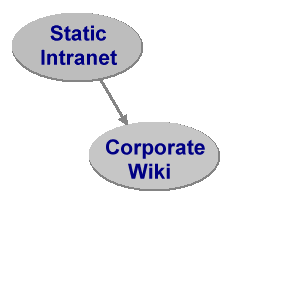 Move some/all Intranet content into a Wiki
 - No difference for readers to browse and search content
- Employees are empowered to fix content on the spot
- Ease of maintenance
- No need to install client side software
- Consistent look & feel
- Paradigm shift
- from: webmasters maintain content
- to: domain experts and casual users maintain content
Slide 6: Challenges of E-mail
-
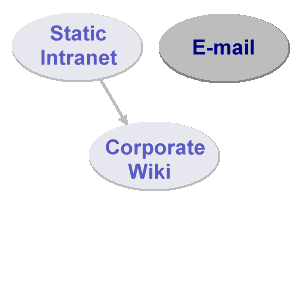 E-mail and mailing lists are great, but:
 - Post and reply vs. post and refine/refactor
- Great for discussion, but ... hard to find "final consensus" on a thread
- E-mail is not hyper-linked and is not structured, content can't be grouped easily into related topics
- E-mail and attachments are not version controlled and it is difficult to determine the history of a document
- Not all interested people / too many people in the loop
Slide 7: Wikis and E-mail
-
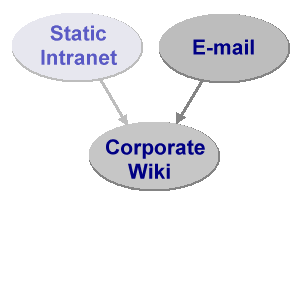 Move some E-mail traffic into a Wiki or Blog
 - Ease of reference (cross-linking)
- Flexible notification (favorites only, daily digest, RSS feed)
- Pockets of knowledge made available to interested parties
- Audit trail / domain experts
- Paradigm shift
- from: post & reply
- to: post & refine & cross-link
- Send e-mail with link to content instead of content itself
Slide 8: Challenges of Business Processes
-
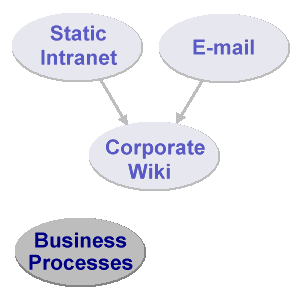 Business processes are implemented in large scale by IT department (Sarbanes-Oxley compliance etc.)
 - Rigid structure by design
- Teams follow formal/informal workflow to accomplish tasks, which is often a paper-based process:
- Roll out laptops to employees
- Status board of call-center
- Sign-off for export compliance of a software release
- No resources allocated to implement applications to automate those processes
- IT department has no bandwidth to implement light weight applications for a variety of teams
- IT department has no bandwidth to implement light weight applications for a variety of teams
Slide 9: Wikis and Business Processes
-
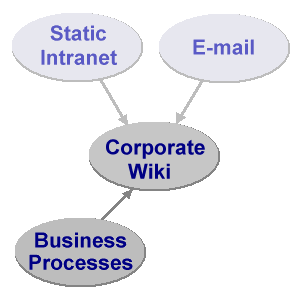 A Structured Wiki is a flexible tool to support evolving processes
 - in the free-form Wiki way -- linked pages, collaboratively maintained
- or with a structured Wiki application -- forms, queries, reports
- Content contributors with moderate skill sets can build web applications
- Paradigm shift
- from: programmers create applications
- to: content contributors build applications
- Similar shift happened with the introduction of spreadsheet programs
Slide 10: What is a Structured Wiki?
- Goal of a Structured Wiki:
- Combine the benefits of a Wiki and a database application
- Wiki:
- Organic content: The structure and text content of the site is open to editing and evolution
- Open content: Readers can refactor incomplete or poorly organized content at any time
- Hyper-linked: Many links to related content due to WikiWord nature
- Trust: Open for anyone to edit, "soft security" with audit trail
- Database application:
- Highly structured data
- Easy reporting
- Workflow (e.g. purchase requisition)
- Access control
Slide 11: Usage Pattern in a Structured Wiki
- Users typically start with unstructured Wiki content
- Example: Call-center status board
- User discovers patterns in content
- Example: Call-center status board has fixed list of users and fixed list of time slots
- User or administrator builds an application, typically in iterations
- Goal: Automate tasks based on discovered patterns
- In other words: A Structured Wiki enables users to build light weight applications
Slide 12: Example: Call-Center Status Board, v1
- Requirement for status board:
- Easily see who is on call at what time
- Easily change the status board
- Start with a simple bullet list for status board v1:
- 07:00am - 11:00am: Richard
- 11:00am - 03:00pm: Peter
- 03:00pm - 07:00pm: Sam
- See CallCenterStatusBoard
 example on TWiki.org
Slide 13: Example: Call-Center Status Board, v2
- Status board v1 does the job, but lets make it more presentable and useful:
- Convert the bullets into a table
- Use WikiWord links to team member's home pages for easy reference
- Add Backup person
- Improved status board v2:
Start End Primary Backup 07:00am 11:00am RichardDonkin 11:00am 03:00pm PeterThoeny 03:00pm 07:00pm SamHasler
- See CallCenterStatusBoardV2 example on TWiki.org
Slide 14: Example: Call-Center Status Board, v3
- Status board v2 is presentable, now lets make it more user friendly:
- Use the TWiki:Plugins.EditTablePlugin to select the times and names from a list
- Use the TWiki:Plugins.EditTablePlugin
- Improved status board v3, view and edit:

- See CallCenterStatusBoardV3 example on TWiki.org
Slide 15: What is TWiki?
-
 TWiki started as a Wiki engine, and quickly evolved into a Structured Wiki for the Enterprise
- Mission: TWiki is a leading-edge, web-based collaboration platform targeting the corporate intranet world. TWiki
- fosters information flow within an organization
- lets distributed teams work together seamlessly and productively
- eliminates the webmaster syndrome of outdated intranet content
- Large number of TWiki Extensions: Add-Ons, Plugins, Skins
- Open Source software (GPL) with active community, hosted at http://TWiki.org/
Slide 16: What is TWiki used for?
- TWiki is a Structured Wiki, typically used as a:
- Shared notebook for projects: Repository, scheduling, meetings
- Departmental collaboration tool: Processes, project reviews, QA tracking
- Intranet publishing tool: IT, HR, ISO standards
- CMS with focus on free-form collaboration: Requirements capture
- Knowledge base: Problem/solution pairs with attached patches
- TWiki started its life as a KB for support
- TWiki started its life as a KB for support
- Platform to create web based applications like news portals, inventory systems, issues tracking systems
Slide 17: Who is using TWiki?
- Many corporations, like 3Com, AMD, Alcatel, AT&T, Boeing, ... Xerox
- BT, Disney Corp, Motorola, SAP, Wind River and others have submitted success stories
- BT, Disney Corp, Motorola, SAP, Wind River and others have submitted success stories
- Academia
- Also Internet communities, such as Chandler Wiki, Java.net's Javapedia, Mandriva Community Wiki, IntelliJ Community Wiki, Indymedia
- Over 1000 installations
- Browse the TWikiInstallation directory to see who is using TWiki for what purpose
Slide 18: Who is developing TWiki?
-
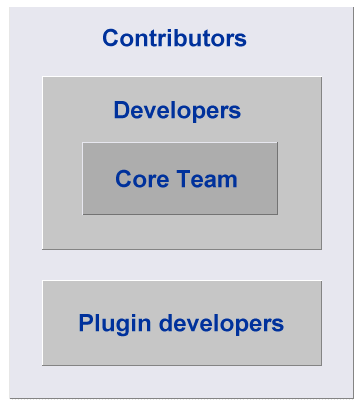 5 Core Team members
- 14 developers with SVN write access to DEVELOP branch
- Over 100 contributors donating ideas, spec, code, patches
- Many TWikiExtension developers
- Main communication vehicle: TWiki at TWiki.org for brainstorming, feature and bug tracking, doc authoring, and support
- Lots of ideas waiting to be implemented
- Talk to us if you are interested in participating in building the future

- Talk to us if you are interested in participating in building the future
Slide 19: TWiki Basics: Access Control
- Default - use Soft Security
- Avoid roadblocks to knowledge sharing
- Special applications - use Access Control
- Avoid write access restrictions - "If you can see you can play"
- Access Control:
- Define groups in Main.TWikiGroups
- Set read/write/rename access restrictions to webs and pages based on these groups
- Complete audit trail of access control settings
Slide 20: TWiki Basics: Skins
- TWikiSkins change the look of a TWiki topic, for example the style of the text and the layout of the header and footer
- Separation of program logic, look and content
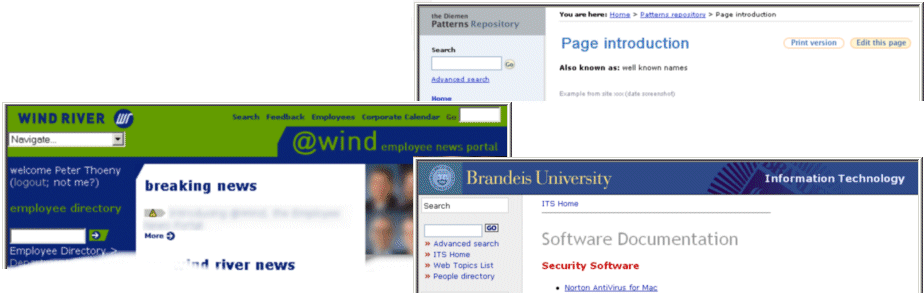
- Corporations typically create their own skin to match the corporate branding standard
- Many SkinPackages available for download at TWiki.org
Slide 21: Major New Features in TWiki 4.0
- WYSIWYG editor (beta)
- New features that strengthen TWiki's position as a platform to build and run wiki applications
- Much simpler install and configuration
- Integrated session support
- Webserver-independent login/logout
- Security sandbox blocks all possible routes for remote command execution on the server
- New editing model allows freer collaboration, without fear of overwriting other people's changes
- Multilingual UI: Chinese, Danish, Dutch, French, German, Portuguese, Spanish
- E-mail confirmations for registration to prevent spamming
- Hierarchical sub-webs
- More at TWikiRelease04x00x00 and TWikiHistory
Slide 22: Example TWiki 4.0 Applications
- TWiki bug tracker Bugs:WebHome
- BlogUp weblog application http://micha.wikiring.de/TWiki/BlogUp
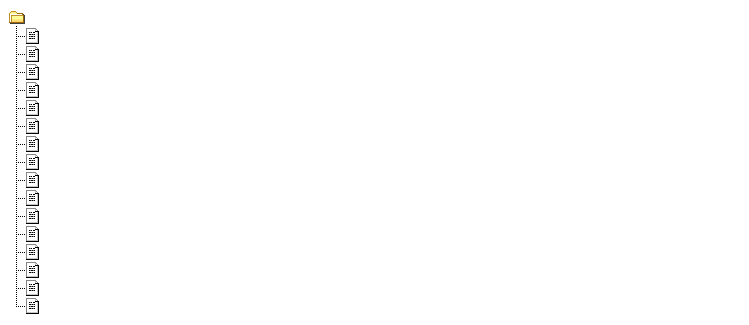
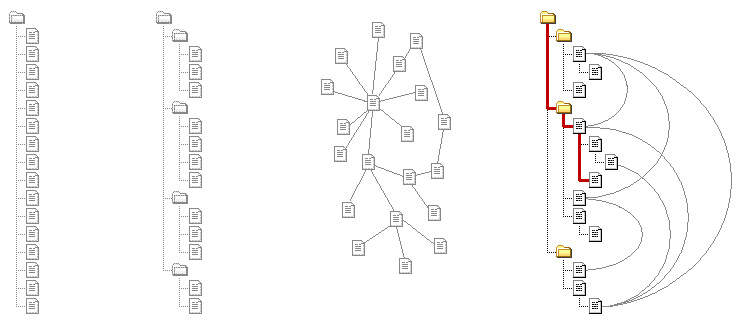
Slide 23: Adding Structure: Context of Content - Database Table
Flat, no hierarchy:
Context: Mainly next/previous; search
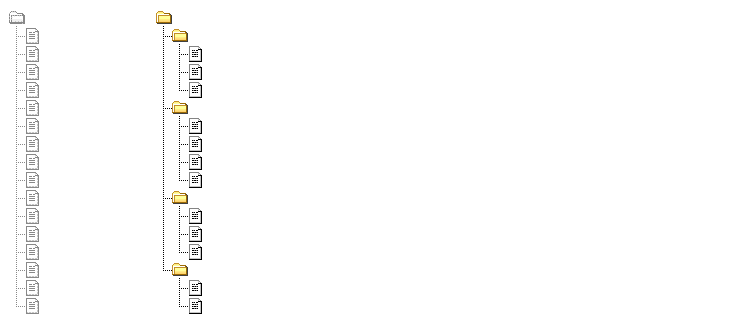
Slide 24: Adding Structure: Context of Content - File System
Tree hierarchy:
Context: Down/up; search
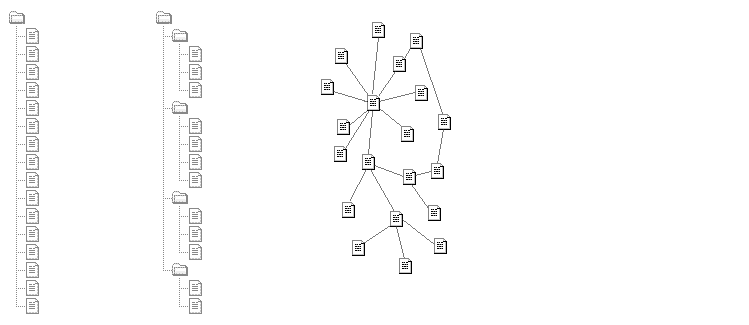
Slide 25: Adding Structure: Context of Content - HTML Pages & Wikis
Hyperlink structure:
Context: "What is related" browsing; search
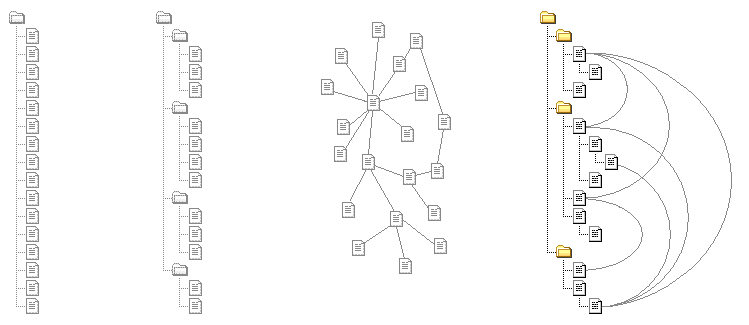
Slide 26: Adding Structure: Context of Content - TWiki Structure
Tree + hyperlink structure:
Context: Down/up browsing; "what is related" browsing; search
Slide 27: Adding Structure: Context of Content - TWiki Breadcrumb
Where am I?
Breadcrumb example:Home
Slide 28: Adding Structure: TWiki Variables
- TWiki Variables are what environment variables are to an OS, or macros are to a programming language
- TWiki Variables are text strings - like
%SCRIPTURL%,%URLPARAM{"city"}%,%INCLUDE{"OtherPage"}%- that get rendered at page view time - Types of variables: Predefined variables; preferences variables; user defined variables
- Useful to create web applications
Slide 29: Adding Structure: TWiki Forms
- Use TWikiForms to add form-based input to free-form content, e.g., you can structure topics with unlimited, easily searchable categories
- A form is defined in a topic - (DB table definition)
- Forms can be attached to topics - (DB table row)
- The form appears in edit mode, and its content gets rendered as a table when viewing the page
Slide 30: Adding Structure: Formatted Search
-
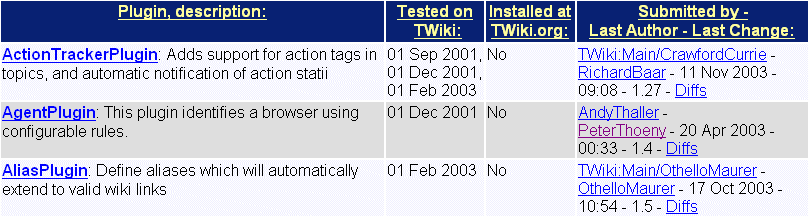
 Use FormattedSearch to generate customized reports in list format or table format
- Typically used to list topics with form data
- Report is embedded in a page with a
%SEARCH{...}%variable - Example applications:
- Example report:
Slide 31: Adding Structure: TWiki Plugins
- TWikiPlugins enhance the functionality of TWiki and add structure to content
- Growing Plugins repository at TWiki.org - over 160 Plugins available for download
- A great resource for administrators and web developers to tailor TWiki to their needs, like for example with:
- ActionTrackerPlugin: Keep track of action items in meeting minutes and notify assignees by e-mail
- CalendarPlugin: Monthly calendars with events
- ChartPlugin: Create charts visualizing TWiki tables
- DatabasePlugin: Access a relational database
- HeadlinesPlugin: Show news based on RSS feeds
- TWikiDrawPlugin: Use the TWikiDraw Java Applet to create editable drawings embedded in topics
- SlideShowPlugin: Turn a TWiki page into a web-based presentations
- ActionTrackerPlugin
Slide 32: Adding Structure: Spreadsheet Plugin
- SpreadSheetPlugin: Add spreadsheet formulae to TWiki tables
- Over 60 formulae available like
$AVERAGE(),$IF(),$REPLACE(),$TIME(),$SET(),$GET()
|
Slide 33: Structured Wiki Example: Feature Tracking
- TWiki.org tracks new features with a Wiki application
- Workflow:
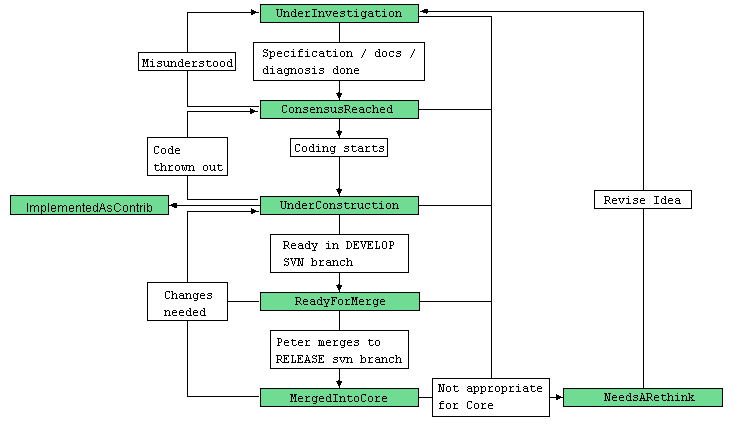
- Sample feature: ShowRevisionsAroundVersion
- Sample status report: DakarRelease
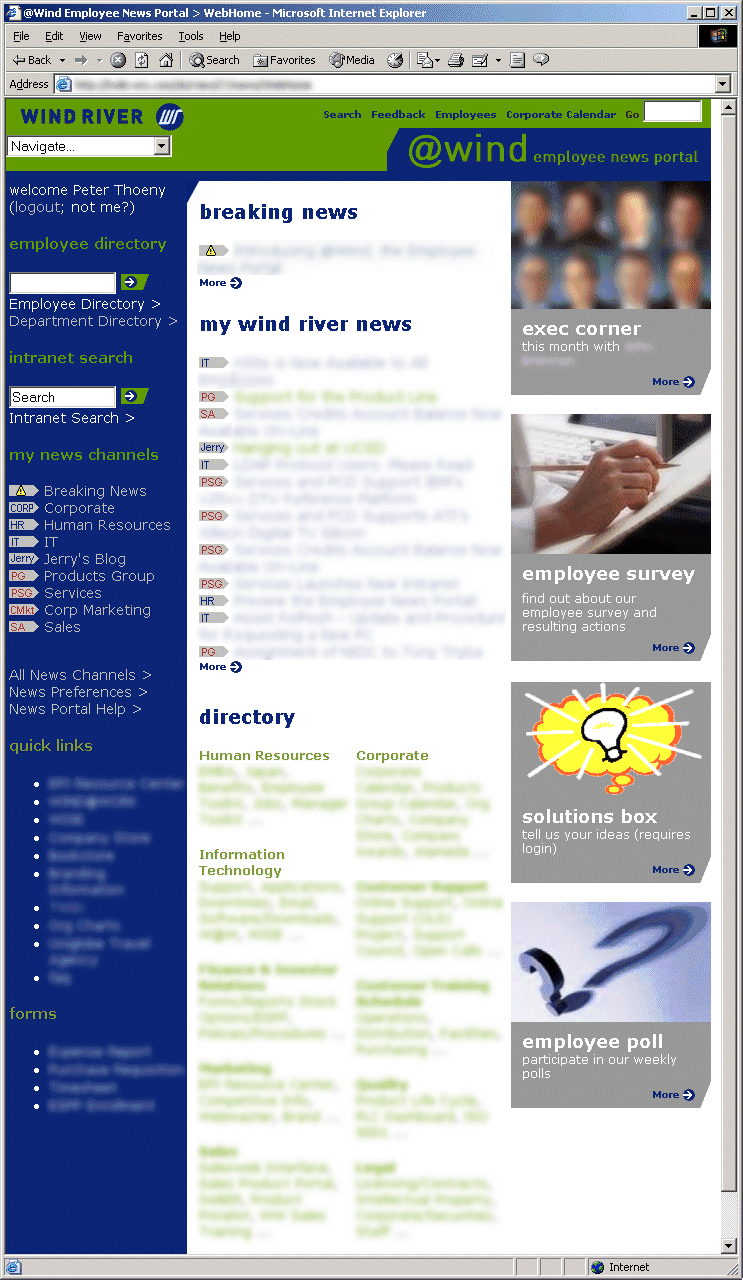
Slide 34: Structured Wiki Example: Employee News Portal
-
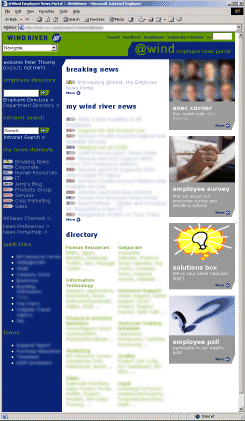 Goal for Employee News Portal:
 - Reduce e-mail flood to the corporate-wide mailing lists
- Reach a broader audience
- Intranet home page as a newspaper
- Specification:
- News channels: IT, Engineering, Sales, etc
- Each news channel has an editor group, responsible for releasing news
- Subscribe to news channels of interest
- Some news channels are "always on", e.g. employees cannot unsubscribe
- Aggregated news is shown on intranet and sent via e-mail
- More details at TWikiNewsPortal
Slide 35: Structured Wiki Example: TWiki Installation Directory
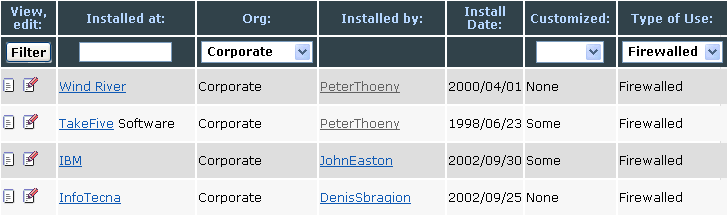
- The TWikiInstallation page lists TWikis installed on public and access restricted web sites
- The entries can be filtered by type of organization, type of use and more
- Built as a TWiki application using TWikiForms, TWikiVariables, FormattedSearch
Slide 36: Initial Deployment of a Wiki
- Grassroot vs. managed deployment of a Wiki
- Single corporate Wiki better then many smaller Wikis
- Plan content and rollout
- Pain killer vs. vitamins
- Build initial structure
- Populate initial content with help from early adopters
- Initial rollout with smaller group
- Train and coach users
- Do not underestimate inertia and time
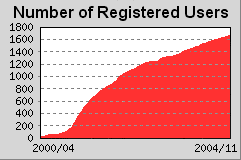
- Expect quick growth after slow start
- Example: Wind River's Wiki has now 65K pages and 22K page changes / month
- Example: Wind River's Wiki
Slide 37: Summary
- A Structured Wiki is a powerful platform for web collaboration
- Collaborate in free form and add structure as needed
- Use it as shared notebooks, a departmental collaboration tool, a publishing tool, a CMS and a knowledge base
- Use it as a platform to create light weight applications
- Easy to share knowledge
- Corporate brain gives a competitive advantage
- Careful coaching is needed
- Viral growth after people "get it"
Slide 38: Questions & Answers
Slide 39: References
- This presentation: http://TWiki.org/cgi-bin/view/Codev/TWikiPresentation2006x02x01
- WikiWikiWeb: http://www.c2.com/cgi/wiki?WikiWikiWeb
- Wiki Engines: http://www.c2.com/cgi/wiki?WikiEngines
- Wikipedia: http://www.wikipedia.org/
- TWiki Home: http://TWiki.org/
- Team Builder - the TWiki wiki and the enterprise, Linux-Magazine UK: http://www.linux-magazine.com/issue/55/TWiki.pdf
- TWiki: Open source with a corporate following; Perl-based wiki offers easy customization & extension, InfoWorld: http://www.infoworld.com/article/05/03/28/13FEblogwiki-rev3_1.html
Slide 40: References, cont.
- Enterprise collaboration with blogs and wikis, InfoWorld: http://www.infoworld.com/article/05/03/25/13FEblogwiki_1.html
- Extreme Blogging, Forbes.com: http://www.forbes.com/best/2004/1213/bow001.html
- Is Wiki under your radar? InfoWorld: http://www.infoworld.com/article /04/11/05/45OPconnection_1.html
- Do-It-Yourself Software for All? BusinessWeek: http://www.businessweek.com/technology /content/oct2004/tc2004106_2351.htm
- 'Wiki' May Alter How Employees Work Together, Wall Street Journal: http://online.wsj.com/article /0,,SB109105974578777189,00.html
- Something Wiki This Way Comes, Business Week: http://www.businessweek.com/magazine/content/04_23/b3886138.htm
Slide 41: About Peter
- Peter Thoeny - Peter@ThoenyPLEASENOSPAM.com
- Founder of TWiki, the leading Wiki for corporate collaboration and knowledge management, managing the open-sourced project for the last six years
- Invented the concept of Structured Wikis - where free form wiki content can be structured with tailored wiki applications
- Recognized thought-leader in Wikis and social software, featured in numerous articles and technology conferences including LinuxWorld, Business Week, Wall Street Journal and more
- Software developer with over 15 years experience, specializing in software architecture, user interface design and web technology
- Graduate of the Swiss Federal Institute of Technology in Zurich
- Lived in Japan for 8 years working as an engineering manager for Denso Create, developing CASE tools
- Now in the Silicon Valley for 7 years, currently working on a book on wikis for the workplace and consulting on Structured Wikis
Notes
- Copyright © 2005 by Peter Thoeny. This presentation may be reproduced as long as you retain the copyright notice and provide a link back to the URL of this presentation on TWiki.org
- This presentation is based on the SlideShowPlugin and uses the TWiki:Main/PeterThoenySlideShowTemplate

Topic revision: r5 - 2011-08-31 - PeterThoeny


 Site map
 Blog web

 Create New Topic
 Index
Index Search
 Advanced search
 My topics of interest
 Changes
 Major changes only
 All tags
 Notifications
 RSS Feed
 Statistics
 Preferences
 Community
  Readme first
 Developers News
 How you can help
 Community roles
 #twiki IRC
 Lima Release
 Feature Proposals
 Bugs Changes
 Categories


 Account


 Ideas, requests, problems regarding TWiki? Send feedback. Ask community in the support forum.
Copyright © 1999-2026 by the contributing authors. All material on this collaboration platform is the property of the contributing authors.